A battery fuse for your amp is a crucial safety device that protects both your amplifier and your vehicle’s electrical system from dangerous shorts and overloads, preventing fires and costly damage. Understanding its purpose and proper installation is key to a safe and powerful audio experience.
Car audio can be amazing. You turn up the volume, and the music just fills your car, making every drive more fun. But sometimes, you might hear crackling, or the sound might cut out. It can be frustrating, especially when you’re trying to enjoy your favorite tunes. One of the most important, yet often overlooked, parts of your car’s sound system is a tiny but mighty component: the battery fuse for your amp. This little guy is your system’s bodyguard, and knowing about it is essential for a safe and powerful setup. Let’s dive into why this fuse is so critical and how you can understand it better.
Battery Fuse for Amp: Essential Power Protection
When you install an amplifier in your car, you’re essentially adding a powerful piece of equipment that draws a lot of energy from your car’s battery. This energy is what makes your speakers sound great, but with great power comes the need for great protection. That’s where the battery fuse for your amp comes in. It’s not just a random part; it’s a vital safety feature designed to prevent disaster.
What Exactly Is a Battery Fuse for an Amp?

Think of a fuse as a sacrificial element in an electrical circuit. It’s designed to break or “blow” when too much electrical current flows through it. This is usually caused by a short circuit or an overloaded system. When the fuse blows, it effectively cuts off the power supply to the amplifier, preventing further damage. It’s like a tiny, smart circuit breaker that gives its life to save the rest of your system and, more importantly, your car.
Why Is It So Important?
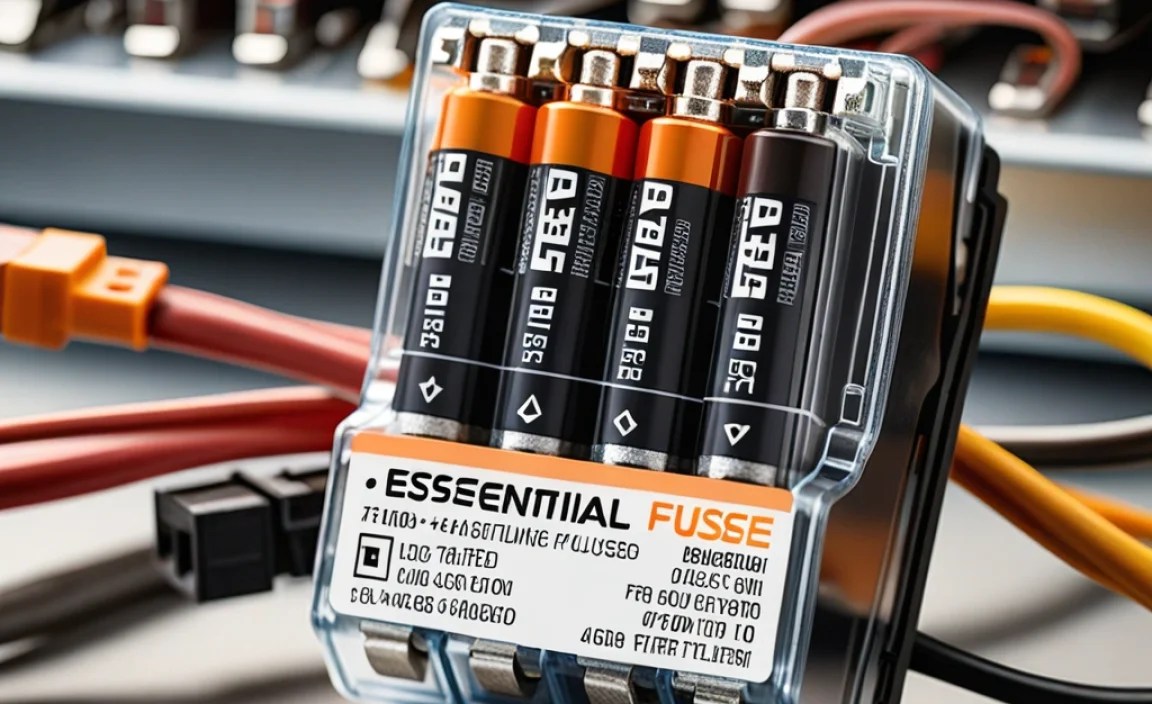
Installing an amplifier requires running a thick power wire from your car’s battery directly to the amp. This wire carries a significant amount of electrical current. If something goes wrong – perhaps the wire gets pinched and touches metal, or the amplifier itself malfunctions – a massive surge of electricity can occur. Without a fuse, this surge could:
- Melt the power wire, potentially causing a fire.
- Damage your amplifier beyond repair.
- Damage your car’s factory electrical system.
- Cause your car battery to overheat or even explode in extreme cases.
The battery fuse for your amp acts as the first line of defense. It’s strategically placed near the battery so that if a problem arises with the wire or the amp, the fuse blows before the current can do serious harm to any part of your vehicle.
Understanding Amp Power Requirements and Fuse Sizing

Choosing the correct fuse is not a guessing game. It directly relates to how much power your amplifier draws. Too small a fuse, and it will blow during normal operation, which is annoying and defeats its purpose. Too large a fuse, and it won’t offer adequate protection in case of a fault.
How to Determine the Right Fuse Size
The best way to find the correct fuse size is to check your amplifier’s user manual. It will clearly state the recommended fuse rating for the power wire. If you don’t have the manual, you can often find this information on the manufacturer’s website.
If that’s not possible, you can estimate based on the amplifier’s total power output (in Watts RMS). A general rule of thumb is to allow about 10 amps of fuse protection for every 100 Watts RMS of continuous power. However, this is a very rough estimate, and the manual is always the definitive source.
For example, if your amplifier is rated at 500 Watts RMS, you might need around a 50-amp fuse. But again, always consult your amplifier’s manual to be absolutely sure. Manufacturers take these requirements very seriously, as improper fusing can lead to voided warranties and damaged equipment.
You’ll often see amplifiers with multiple power inputs or separate fuses built into the amplifier itself. The main battery fuse is the one you install inline on the power wire coming directly from the positive terminal of your car battery.
Types of Fuses Used for Car Audio

There are several common types of fuses used in car audio installations. Knowing them can help you understand what you’re looking at:
- AGU Fuses: These are cylindrical glass or ceramic fuses, often housed in an inline fuse holder. They are common in older or simpler car audio setups.
- ANL Fuses: These are larger, rectangular fuses, typically found in high-power systems. They offer robust protection and are usually housed in heavy-duty, gold-plated fuse holders.
- Mini ANL Fuses: A smaller version of the ANL fuse, offering similar protection in a more compact package.
- Maxi Fuses: These are larger, plastic-bodied fuses with blade-style contacts. They are designed to handle significant current and are often used for main power distribution or high-draw components.
The type of fuse you use will depend on the rating required and the type of inline fuse holder you install. The fuse holder is just as important as the fuse itself, ensuring a secure connection and protecting the fuse from the elements.
Installing a Battery Fuse Holder and Fuse

This is a DIY task that most beginners can handle with a bit of care and the right tools. The goal is to install the fuse holder in the power wire running from your car’s battery to the amplifier, as close to the battery as possible, typically within 18 inches.
Tools and Materials You’ll Need:
Before you start, make sure you have everything ready. This makes the job smoother and safer.
- Inline Fuse Holder: Choose one that matches the type and amperage of the fuse required for your amplifier.
- Correctly Rated Fuse: As determined by your amplifier’s manual. It’s good to have a spare!
- Wire Strippers/Crimpers: For preparing the power wire and attaching terminals.
- Ring Terminals: To connect the power wire to the fuse holder and either the battery or distribution block. Ensure they are the correct size for your wire and the terminal posts.
- Wrench or Ratchet Set: To disconnect and reconnect the car battery and to secure terminals.
- Electrical Tape or Heat Shrink Tubing: To insulate connections and provide a clean finish.
- Wire Cutter: For cleanly cutting wires if needed.
- Gloves and Eye Protection: Safety first!
Step-by-Step Installation Guide:
You’re about to make your car audio system safer. Follow these steps carefully:
- Disconnect the Car Battery: This is the MOST IMPORTANT step. Always disconnect the negative (-) terminal first. This prevents accidental short circuits.
- Prepare the Power Wire: If you’re running a new power wire, ensure it’s the correct gauge for your amplifier’s requirements. You can find detailed wire gauge charts online, for example, from the Wire & Cable Calculator.
- Cut the Power Wire: Identify where you want to install the fuse holder. It should be as close to the battery as possible (within 18 inches). Cut the main power wire cleanly.
- Strip the Wire Ends: Carefully strip a small amount of insulation from both ends of the cut power wire, exposing enough wire to make a secure connection with the ring terminals or the fuse holder’s terminals.
- Crimp the Ring Terminals: Attach a ring terminal to each end of the cut power wire using your crimping tool. Ensure a very tight and secure crimp.
- Connect to the Fuse Holder: Connect one end of the power wire (with its ring terminal) to one side of the inline fuse holder. Follow the fuse holder’s instructions for connection – it might involve screws or crimp-on terminals.
- Option A: Connecting directly to the Battery: If your fuse holder has a terminal that connects directly to the battery’s positive terminal, attach it there. Ensure it’s snug.
- Option B: Connecting to a Distribution Block: If you have a distribution block, connect the other end of the power wire (with its ring terminal) to the input terminal of the distribution block.
- Position the Fuse Holder: Mount the fuse holder securely so it doesn’t move around. You can use zip ties or specialized mounting brackets. It should be easy to access for future fuse changes but protected from damage.
- Insert the Fuse: With the fuse holder connected on one side but not yet to the battery (or distribution block if it’s the final connection), insert the correctly rated fuse into the holder.
- Final Connection: Connect the other end of the power wire (from the fuse holder) to the positive terminal of your car battery or the appropriate input on your distribution block. Ensure a solid, clean connection.
- Secure and Insulate: Double-check all connections. Use electrical tape or heat shrink tubing to insulate any exposed wire or terminals, providing a professional and safe finish.
- Reconnect the Battery: Reconnect the negative (-) terminal of your car battery last.
- Test Your System: Turn on your stereo and check if the amplifier powers up. Play some music to ensure everything is working correctly.
Remember, if you’re unsure about any part of this process, it’s always best to consult a professional car audio installer.
Troubleshooting Common Fuse Issues
Fuses are designed to blow, so don’t panic if one does. However, frequent fuse blowing usually indicates an underlying problem.
Why Did My Fuse Blow?
- Short Circuit: This is the most common reason. A bare wire touching metal, a loose connection, or a faulty component can cause a short.
- Overload: Your amplifier is trying to draw more current than it’s designed for, perhaps due to a faulty speaker or a demand exceeding its rating.
- Incorrect Fuse Rating: Using a fuse that is too small for the amplifier’s needs will cause it to blow during normal operation.
- Faulty Amplifier: Internal component failure in the amplifier can lead to excessive current draw.
- Loose Connections: A loose connection can cause resistance, heat, and ultimately, a blown fuse.
What to Do When a Fuse Blows
If your fuse blows, the first step is obvious: replace it with a fuse of the exact same rating. If it blows again immediately or shortly after, do not keep replacing it. This is a strong signal that there is a problem that needs addressing. You’ll need to disconnect the battery again and systematically check your wiring for any signs of damage, loose connections, or exposed wires. If you can’t find an obvious issue, it might be time to have your amplifier or wiring checked by a professional.
An important consideration is the quality of the fuse itself. Cheap, low-quality fuses are more prone to premature failure. Investing in reputable brands can save you headaches down the line.
Car Battery Health and Its Relation to Your Amp
Your car’s battery and the power system for your amplifier are intrinsically linked. A healthy battery is crucial for your entire car’s electrical system, including your audio setup.
Signs of a Weak Car Battery:
- Slow engine cranking when starting the car.
- Dimming headlights or interior lights, especially when other electrical components are in use.
- Dashboard warning lights indicating battery issues.
- Corrosion on the battery terminals.
- The battery is several years old (typically 3-5 years is the lifespan).
If your car battery is weak, it might struggle to provide sufficient power not only for starting your car but also for running your amplifier. This can lead to distorted sound, the amplifier shutting down intermittently, or even the car battery draining faster than it should. An under-powered battery can also put extra strain on your alternator.
Keeping Your Car Battery in Top Shape
Regular maintenance can extend the life of your car battery:
- Keep Terminals Clean: Clean off any corrosion with a wire brush and a baking soda/water mixture.
- Check Water Levels (if applicable): For non-maintenance-free batteries, check and top up distilled water if needed.
- Ensure a Secure Fit: Make sure the battery is held firmly in its mounting bracket.
- Limit Accessories When the Engine is Off: Avoid draining the battery unnecessarily.
- Test Your Battery Periodically: Most auto parts stores offer free battery testing. This is a great way to catch potential problems early.
For high-performance car audio systems that draw significant power, some users opt for upgraded batteries or even dedicated power cells designed to handle the extra load without compromising the car’s starting ability. However, for most aftermarket amplifiers, a healthy factory car battery, properly fused, is sufficient.
Powering Your Portable Devices: Phone Batteries, Chargers, and Power Banks
While we’ve focused on car audio, the principles of battery power, charging, and protection apply to our everyday portable devices too. Understanding these can improve their longevity and your convenience.
Phone Batteries: The Heart of Your Device
Modern smartphones rely on lithium-ion batteries. These batteries have a limited lifespan, typically providing optimal performance for 2-3 years or 500-1000 charge cycles. As they age, they hold less charge, and they might not be able to supply peak power needed during demanding tasks.
Tips for Phone Battery Health:
- Avoid Extreme Temperatures: Don’t leave your phone in a hot car or in freezing conditions.
- Don’t Always Charge to 100%: Lithium-ion batteries generally prefer to be kept between 20% and 80% charge.
- Use Reputable Chargers: Cheap, uncertified chargers can damage your battery.
- Avoid Deep Discharges: Try to recharge before the battery gets critically low.
Chargers: The Juice Provider
Your phone charger (often a USB adapter) converts wall power into the correct voltage and amperage to charge your phone. Using an underpowered or faulty charger can lead to slow charging times or even damage your phone’s charging port or battery over time. Always use the charger that came with your device or a certified replacement from a reputable brand. For example, the Federal Communications Commission (FCC) provides guidance on electronics safety and compliance, which includes chargers.
Power Banks: Portable Energy on the Go
Power banks are essentially portable batteries that can recharge your devices when you’re away from an outlet. They come in various capacities, measured in milliamp-hours (mAh). When choosing a power bank, consider:
- Capacity: A 10,000 mAh power bank can charge a typical smartphone about 2-3 times.
- Output Ports: Some have multiple USB ports, allowing you to charge more than one device.
- Fast Charging: Look for power banks that support fast charging technologies like USB Power Delivery (PD) or Qualcomm Quick Charge if your phone supports them.
- Safety Features: Reputable power banks have built-in protections against overcharging, overheating, and short circuits.
Just like car batteries, power bank batteries degrade over time and with use. To maintain their performance, store them with about a 50% charge and recharge them every few months if not in regular use.
Battery Fuses for Other Applications
The concept of a battery fuse isn’t limited to car audio. You’ll find them protecting a variety of electronics:
- Home Electronics: Many power adapters for laptops, TVs, and other appliances have internal or external fuses to protect against surges.
- RC Cars and Drones: These high-performance hobby devices often have small, replaceable fuses to protect their batteries and motors.
- Boats and RVs: Similar to cars, marine and recreational vehicles use fuses to protect various electrical systems powered by batteries.
No matter the application, the principle remains the same: a battery fuse is a safety device. Understanding its role and how to maintain it is essential for protecting your valuable equipment.
Frequently Asked Questions (FAQs)
Q1: What happens if I use a fuse that is too big for my amp?
A: If you use a fuse that’s too large, it won’t blow when it should during a fault. This means a dangerous overcurrent could bypass the fuse, potentially damaging your amplifier, wiring, or even causing a fire before any protection kicks in. It’s essential to use the exact amperage recommended by your amplifier’s manufacturer.