Quick Summary: Secure, marine-grade battery holders are vital for boat safety, preventing dangerous movement and potential damage. Properly installed holders ensure your battery stays put, crucial for reliable power and avoiding electrical hazards on the water. Invest in the right holder to protect your vessel and yourself.
Battery Holders for Boats: Essential Safety Solutions
Ever worry about your boat’s battery shifting around while you’re out on the water? It’s a common concern, and for good reason. A loose battery can be a serious safety hazard, leading to damage, short circuits, or even fires. But don’t let that thought spoil your fun! Keeping your battery secure is simpler than you might think. This guide will walk you through everything you need to know about battery holders for boats, making sure your power source stays put, safe, and sound.
We’ll cover why these holders are so important, the different types available, and how to choose and install the best one for your needs. By the end of this, you’ll feel confident about keeping your boat’s battery secure and your adventures worry-free.
Why Battery Holders are Crucial for Boat Safety

On land, a car battery might bounce a bit if you hit a pothole, but it’s generally pretty stable. On a boat, things are different. The constant rocking, pitching, and rolling of waves mean your battery is subjected to much more movement. Without a proper holder, this movement can have serious consequences.
- Preventing Movement and Damage: The primary job of a battery holder is to keep the battery firmly in place. This stops it from sliding, tipping, or banging against other components, which could cause damage to the battery itself or nearby equipment.
- Avoiding Electrical Hazards: A battery holds a significant amount of electrical power. If the terminals or casing become damaged due to movement, there’s a risk of short circuits. This can lead to sparks, overheating, and, in the worst-case scenario, a fire.
- Ensuring Reliable Power: When a battery is loose, its connections can become unreliable. This can mean intermittent power to your essential boat systems, like navigation lights, radios, or bilge pumps, which can be dangerous and inconvenient.
- Meeting Regulations: In many areas, having your marine battery properly secured is a legal requirement for safety. This helps ensure boats are operated safely and reduces potential risks to passengers and the environment.
Understanding Different Types of Battery Holders

Not all battery holders are created equal, and the best choice for your boat will depend on its size, type, and where the battery is located. Here are some of the common types you’ll find:
1. Battery Boxes
These are the most common and versatile options. A battery box is essentially a sturdy plastic container designed to house your battery. Most come with a lid and often have straps or tie-down mechanisms.
- Pros: Excellent protection for the battery casing, helps contain potential leaks or spills from the battery acid, easy to install and remove the battery from.
- Cons: Can be bulky, might require some space for mounting.
- Best for: Most recreational boats, car batteries used as deep-cycle power sources, and general-purpose battery storage.
Many marine battery boxes comply with ABYC (American Boat and Yacht Council) standards. According to the ABYC E-11 standard (ABYC Standards Overview), batteries should be secured to prevent movement in any direction. Battery boxes, when properly installed, meet this requirement.
2. Battery Trays with Straps
These consist of a sturdy base (the tray) that the battery sits in, along with heavy-duty straps that go over the top and secure the battery to the tray. The tray itself is then bolted down to the boat’s structure.
- Pros: Provides a very secure hold, allows for good ventilation around the battery, can be a more compact solution than a full box.
- Cons: Doesn’t offer as much protection against spills as a box, requires a secure mounting surface.
- Best for: Situations where space is limited, or where battery ventilation is a primary concern.
3. Custom-Built Brackets
For some boats, especially larger vessels or those with uniquely shaped battery compartments, custom-made brackets might be necessary. These are often fabricated from metal, like aluminum or stainless steel, and are designed to precisely fit the battery and the boat’s hull.
- Pros: The most secure and customized fit, can be designed for specific weight distribution and accessibility.
- Cons: More expensive and time-consuming to create, requires professional fabrication.
- Best for: Large yachts, commercial vessels, or boats with limited standard mounting options.
Choosing the Right Battery Holder for Your Boat

Selecting the right battery holder isn’t just about picking the cheapest or the biggest. You need to consider a few key factors to ensure maximum safety and effectiveness.
1. Battery Size and Type
Measure your battery! This sounds obvious, but it’s crucial. Battery holders are designed to fit specific battery group sizes. Make sure the holder is compatible with the dimensions (length, width, height) and terminal type of your marine battery. Most holders will specify which group sizes they accommodate.
2. Boat’s Electrical System Needs
Are you using your battery for starting your engine, running electronics, or both? If you have a high-demand system, you might have multiple batteries. Ensure your chosen holder system can accommodate all your batteries securely and that they are properly spaced for ventilation and access.
3. Installation Location
Where will the holder be mounted? The location needs to be a solid, stable part of the boat’s structure that can withstand the forces of the sea. It should also be accessible for maintenance but protected from direct water spray and extreme temperatures where possible. Ensure there’s adequate ventilation, especially if the battery will be enclosed.
4. Material and Durability
Boat environments are harsh – salt, moisture, and UV exposure can degrade materials quickly. Look for battery holders made from marine-grade, UV-resistant plastics, or corrosion-resistant metals like stainless steel or anodized aluminum. These materials are built to last in an unforgiving marine environment.
5. Safety Standards and Regulations
As mentioned, many authorities and organizations have safety guidelines for marine battery installations. Look for holders that explicitly state compliance with standards like USCG (United States Coast Guard) recommendations or ABYC guidelines. This ensures you’re meeting the highest safety benchmarks.
Installation Steps: Securing Your Boat Battery

Installing a battery holder is a DIY-friendly job, but it’s important to do it correctly. Here’s a general step-by-step guide. Always refer to the manufacturer’s instructions for your specific holder.
Tools and Materials You Might Need:
- The battery holder (box or tray with straps)
- Marine-grade stainless steel screws or bolts
- Washers (preferably with a rubber or nylon insulative layer)
- A drill with appropriate drill bits
- A socket set or wrenches
- A sealant (marine-grade silicone or butyl tape)
- Safety glasses
- Gloves
- Your boat battery (disconnected!)
Step-by-Step Installation Process:
- Disconnect the Battery: This is the most critical safety step. Always disconnect the negative (black) terminal first, then the positive (red) terminal. If you’re replacing an old holder, remove the battery carefully.
- Choose the Mounting Location: Select a sturdy, flat surface within the boat’s hull or a dedicated battery compartment. Ensure it’s out of the main flow of foot traffic and protected as much as possible.
- Position the Holder: Place the battery box or tray in the chosen location. Ensure it fits snugly and allows enough space for the battery and ventilation.
- Mark Mounting Holes: While holding the holder in place, use a marker or a drill bit to mark where the mounting holes need to be drilled.
- Drill Pilot Holes: Remove the holder. Drill pilot holes at the marked locations. Make sure the drill bit size is appropriate for your screws or bolts – not too large, not too small. If drilling into fiberglass, ensure you don’t drill too deep into the hull structure itself if it’s critical.
- Prepare the Surface (Optional but Recommended): For a watertight seal, especially if mounting on a deck or bulkhead that might get wet, apply a bead of marine-grade sealant around the marked area where the holder will sit.
- Mount the Holder: Place the holder back over the pilot holes. Insert your marine-grade stainless steel screws or bolts with washers through the holder and into the pilot holes. Tighten them securely using your socket set or wrench. Ensure the holder is firmly attached and doesn’t move.
- Place the Battery: Carefully position the disconnected battery into the secured holder or box. Ensure it sits flat and stable.
- Secure the Battery within the Holder:
- For Battery Boxes: Close the lid and use the provided straps or clamps to hold the lid down and secure. Some boxes have tie-down points.
- For Trays with Straps: Place the straps over the battery and tighten them firmly but without over-stressing the battery casing. The battery should not be able to move at all.
- Reconnect the Battery: Reconnect the positive (red) terminal first, then the negative (black) terminal. Ensure the connections are clean and tight.
- Test Stability: Gently try to rock the battery. It should not move in any direction.
For a comprehensive guide on marine electrical systems, including battery installation best practices, the U.S. Coast Guard Boating Safety website is an excellent resource.
Battery Maintenance Tips for Optimal Performance
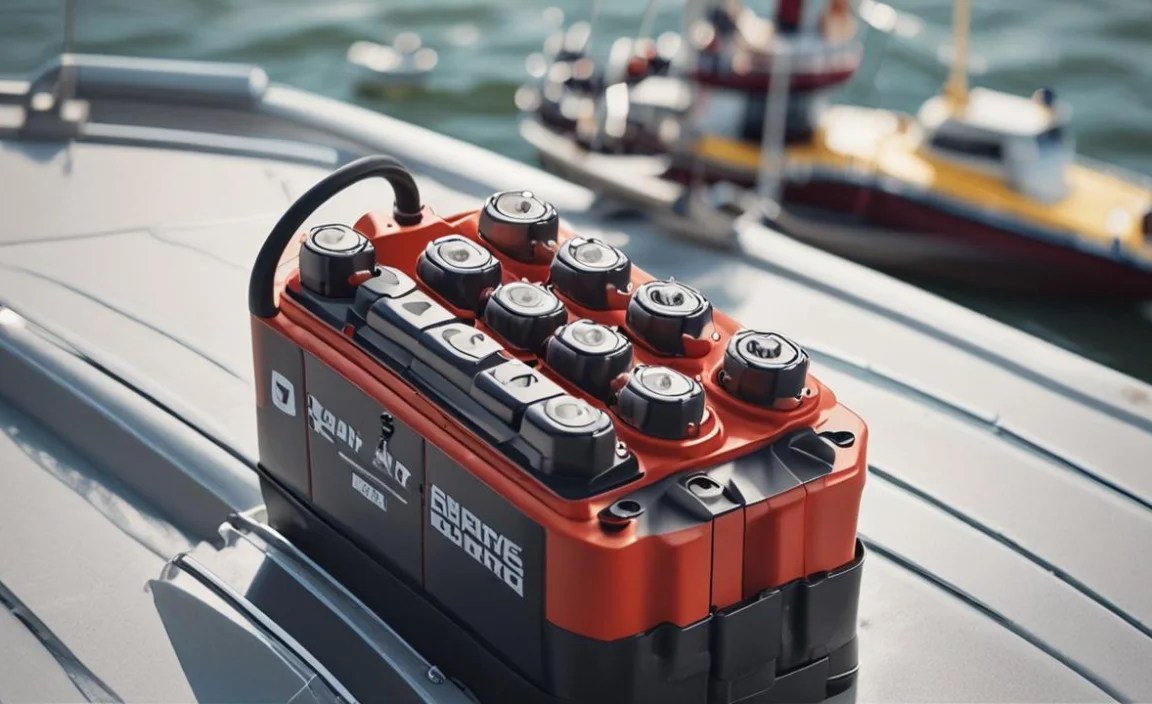
A secure battery holder is key, but keeping your battery itself in good shape is also vital for safety and reliability. Here are some simple maintenance tips:
Regular Cleaning
Keep the battery terminals clean and free of corrosion. Corrosion can build up over time and interfere with the electrical connection. You can clean it using a wire brush and a mixture of baking soda and water. Always wear gloves and eye protection during this process.
Check Connections
Ensure all cables are tightly secured to the battery terminals. Loose connections can cause the battery to drain faster or lead to intermittent power issues.
Inspect for Damage
Periodically inspect the battery casing for any signs of damage, swelling, or leaks. If you notice anything unusual, the battery should be replaced immediately by a professional.
Terminal Protection
After cleaning, you can apply a terminal protector spray or dielectric grease to help prevent future corrosion and ensure a good connection.
Charging Habits
If you use a deep-cycle battery, follow the manufacturer’s recommendations for charging. Avoid draining the battery completely too often, as this can shorten its lifespan. For starting batteries, ensure your charging system is functioning correctly.
Battery Holder vs. Battery Box: What’s the Difference?
While both serve the purpose of securing a battery, there’s a subtle difference in their design and function, especially in a marine context.
| Feature | Battery Holder | Battery Box |
|---|---|---|
| Primary Function | Secures the battery to a surface. | Houses and secures the battery, often with containment. |
| Structure | Typically a tray or frame with straps/clamping mechanisms. | A full enclosure (box with lid) designed to contain the battery. |
| Spill Containment | Limited; dependent on tray design. | Excellent; designed to contain leaks and spills. |
| Protection | Protects from movement. | Protects from movement, impact, and environmental factors (e.g., spray). |
| Ventilation | Generally good, as it’s often an open-air design. | Can be designed with vents, but may offer less airflow than an open tray. |
| Common Use | Often used in conjunction with a battery box or for specific installation requirements to add an extra layer of security. | Standard for most marine applications where containment and protection are paramount. |
In essence, a battery box often incorporates the function of a holder within its design. Many marine battery boxes will have interior tie-down points or straps that act as the “holder” mechanism. A standalone battery holder might be something like a specialized tray system.
When to Replace Your Battery Holder
Battery holders are built to last, but they aren’t indestructible. You might need to replace yours if you notice any of the following:
- Cracks or Compromised Material: Check the plastic for any signs of UV degradation, brittleness, or cracks. If the material is failing, it can no longer reliably hold the battery.
- Corrosion on Metal Components: If your holder has metal parts (like latches or straps), significant rust or corrosion can weaken them.
- Loose Mounting Points: If the holder itself seems loose or the mounting holes are enlarged, it’s time for replacement.
- Incompatibility with New Battery: If you upgrade to a differently sized battery, your old holder might not fit securely.
Don’t wait for a holder to fail before replacing it. Proactive replacement is a key part of maintaining a safe and reliable boating experience.
Frequently Asked Questions (FAQ)
What is the main purpose of a battery holder on a boat?
The main purpose is to prevent the boat battery from moving, shifting, or tipping over due to the boat’s motion on the water. This is crucial for safety, preventing damage to the battery and electrical system, and ensuring reliable power.
Are all boat battery holders waterproof?
Marine battery boxes are designed to be water-resistant and contain spills, but direct submersion or constant high-pressure water exposure is generally not recommended for the battery itself. The holder’s job is primarily security and containment, not waterproofing the battery from external sources.
Can I use a car battery holder on my boat?
While a car battery holder might physically fit some marine batteries, it’s generally not recommended. Marine batteries and boat environments have different requirements. Marine-grade holders are made with materials resistant to salt, moisture, and UV, and are designed to meet specific safety standards for boats.
How often should I check my boat battery holder?
It’s a good practice to check your battery holder and the security of your battery at least once a season, or before any extended trip. Look for any signs of wear, damage, or looseness.
Do I need a battery box or just straps?
A battery box offers more comprehensive protection by containing spills and protecting the battery from impact and the elements. Straps and trays provide secure anchoring, but lack spill containment. For most recreational boats, a marine-grade battery box is the preferred and often required solution for overall safety.
What happens if my boat battery is not secured?
An unsecured battery can lead to severe problems: damage to the battery casing causing leaks of corrosive acid, short circuits leading to fires, unreliable power supply to onboard systems like navigation or communication equipment, and potential safety hazards to passengers.
Conclusion
Keeping your boat’s battery secure with the right holder isn’t just a recommendation; it’s a fundamental aspect of safe boating. A well-chosen and properly installed battery holder or box protects your vessel, your passengers, and ensures that your essential power systems function reliably when you need them most. By understanding the different types available, considering your specific needs, and following straightforward installation and maintenance steps, you can confidently ensure your battery is as safe and stable as the rest of your boat.
Don’t overlook this crucial safety component. Investing a little time and effort into a marine-grade battery holder will provide significant peace of mind, allowing you to focus on enjoying your time out on the water. Happy boating!