Quick Summary Summary: Keeping your stop-start car battery charged before winter is essential. Cold weather drains batteries faster. A simple charge can prevent frustrating breakdowns and save you money. Learn the easy steps to ensure your battery is ready for the cold.
Charging Your Stop-Start Battery for Winter: A Proven Essential
Winter is coming, and with it, colder days. For many drivers, this means one thing: a higher chance of car trouble. One of the most common headaches? A dead car battery. If you have a car with a stop-start system, this is even more important to get right. These smart systems rely heavily on a healthy, well-charged battery. Leaving it to the cold can lead to some serious frustration and unexpected costs. But don’t worry! With a little preparation, you can easily keep your stop-start battery in top shape and avoid winter car woes. We’ll show you exactly how to do it, step by step. Let’s get your car ready!
Why Winter is Tough on Stop-Start Batteries

You might wonder why winter seems to be the villain for car batteries. It’s all about the science of cold and chemistry. Cold temperatures make the chemical reactions inside your battery slow down. This means it produces less power when you need it most. At the same time, your engine needs more power to crank over in the cold. Think of it like trying to start a stubborn engine on a frosty morning – it’s harder work!
Stop-start systems add another layer of demand. They frequently turn your engine off and on, even for short stops like at traffic lights or in queues. Each time the engine restarts, it pulls a good amount of power from the battery. If your battery is already weak or running low, these frequent demands can quickly drain it. This is especially true when the battery’s overall capacity is reduced by the cold.
Understanding Stop-Start Battery Types
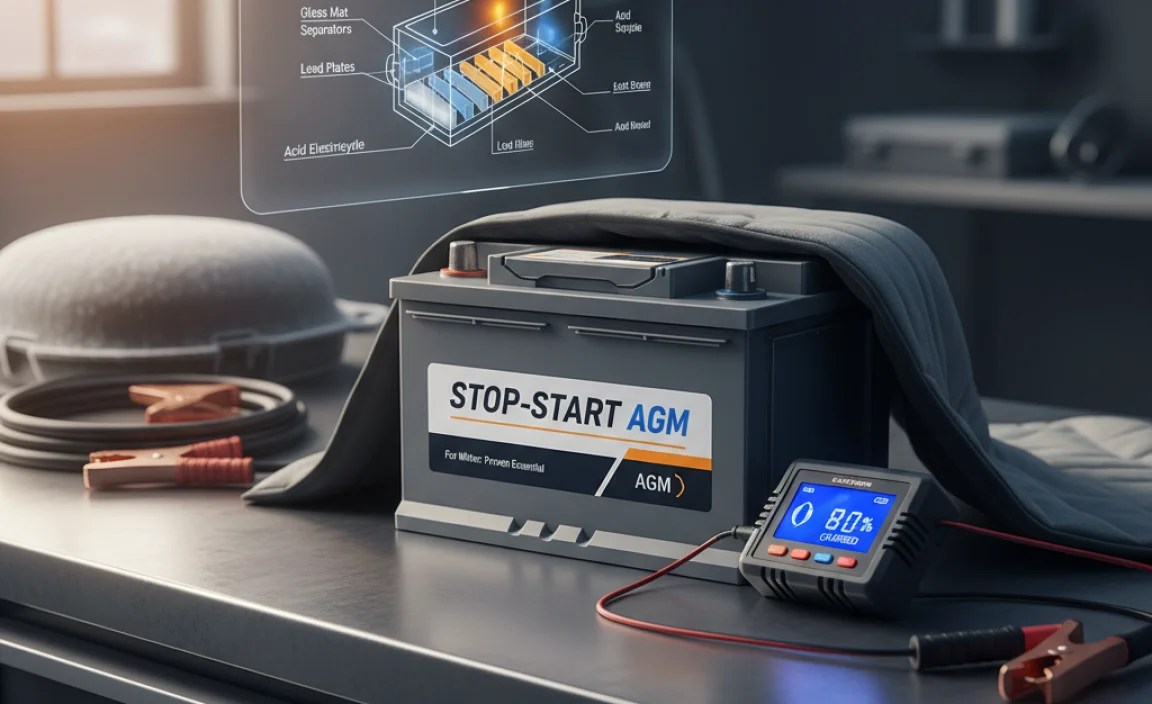
Most modern cars with stop-start technology use special types of batteries. The two most common are Enhanced Flooded Batteries (EFB) and Absorbed Glass Mat (AGM) batteries. It’s important to know which one you have, as it can affect charging methods and battery life.
- AGM Batteries: These are the premium choice for many vehicles. They’re sealed, spill-proof, and can handle deep discharges and high electrical demands better than standard batteries. They are very common in cars with advanced stop-start systems and regenerative braking.
- EFB Batteries: These are an upgrade from traditional flooded batteries. They are designed to handle the frequent start-stop cycles and higher charging demands of less complex stop-start systems. They are often found in smaller or mid-range vehicles with this technology.
Knowing your battery type is crucial when choosing a charger. Using the wrong charger can damage the battery, reduce its lifespan, or even be unsafe.
What Happens When a Stop-Start Battery Gets Low?

A neglected stop-start battery in winter can cause a cascade of problems. You’ll likely notice warning lights on your dashboard. The stop-start system itself will probably cease to function, often giving you a message that it’s unavailable. Then, you might experience issues with other electrical components – headlights could dim, your radio might cut out, or windows might move slowly.
The ultimate symptom, of course, is a car that won’t start. When this happens in the biting cold, it’s not just inconvenient; it can be a real safety concern, especially if you’re stranded somewhere remote or in bad weather. A flat battery can also lead to more serious issues for your car’s electronics if jump-started incorrectly, or if it’s left to sit dead for too long.
Why Regular Charging is Your Winter Shield
Think of charging your stop-start battery before winter like putting on a warm coat before heading outside on a cold day. It’s a protective measure that ensures everything works as it should. A fully charged battery performs better in the cold because it has more stored energy reserves. This extra power helps it overcome the increased resistance of cold engine oil and the lower efficiency of the battery’s own chemical processes.
For stop-start systems, a healthy charge means the system can reliably restart your engine after it’s been turned off. It also means the battery can better cope with the electrical demands of the car while the engine is temporarily stopped, such as powering cabin lights, the infotainment system, or anti-theft devices.
Essential Tools for Charging Your Battery

You don’t need to be a master mechanic to charge your car battery. A few simple tools and the right charger will have you covered. Here’s what you’ll want to have on hand:
What You’ll Need:
- A Smart Battery Charger: This is the most important item. Look for a charger specifically designed to handle AGM or EFB batteries, and one that offers a multi-stage charging process. These are often called “smart chargers” or “trickle chargers” and are designed to prevent overcharging.
- Safety Gloves: Protect your hands from grease and potential battery acid.
- Safety Goggles: Essential for protecting your eyes. Batteries can sometimes spark or release corrosive fumes.
- Wire Brush or Battery Terminal Cleaner: To ensure a clean connection between the charger clamps and the battery terminals. A dirty connection can hinder charging.
- Vehicle Owner’s Manual: This is your best friend. It will tell you the specific type of battery your car uses and any special charging instructions or precautions.
- Optional: Multimeter: If you want to check the battery’s voltage before and after charging, a multimeter is a handy tool.
Step-by-Step Guide: Charging Your Stop-Start Battery
Safety first! This process is generally straightforward, but always follow these steps carefully.
Step 1: Prepare Your Vehicle and Workspace
Find a well-ventilated area to work. Avoid charging the battery in a confined, unventilated space, as batteries can release explosive hydrogen gas during charging. Turn off your car’s engine and remove the key from the ignition. Ensure all lights, radio, and other accessories are switched off.
Step 2: Locate and Access the Battery
The battery is usually under the hood, often in a compartment near the front. In some cars, it might be in the trunk or under a seat. Consult your owner’s manual if you’re unsure. Once located, you’ll need to access it. This might involve removing a plastic cover.
Step 3: Inspect the Battery
Check the battery for any cracks, leaks, or corrosion on the terminals (the positive and negative posts). If there’s a lot of white or greenish powdery buildup on the terminals, you’ll want to clean them. This buildup is corrosive and can prevent a good connection. Use your wire brush or a specialized battery terminal cleaner for this. Always wear your gloves and goggles.
Step 4: Connect the Charger Cables
Important! Connect the charger clamps in the correct order to avoid sparks. Typically:
- Connect the RED (+) clamp to the positive (+) terminal on the battery.
- Connect the BLACK (-) clamp to the negative (-) terminal on the battery.
Some newer vehicles may have specific charging points or require a slightly different connection method to protect onboard electronics. Always refer to your car’s owner’s manual for these specific instructions. If you see a small graphic of a battery and plug in your manual, it might indicate dedicated charging points separate from the battery terminals.
Step 5: Set Up Your Smart Charger
Plug in your smart battery charger. Most smart chargers have different modes. Select the appropriate mode for your battery type (AGM or EFB). The charger will then assess the battery’s condition and begin its charging cycle. Often, there are indicator lights to show the charging status (charging, fully charged, error).
A smart charger is designed to monitor the battery’s voltage and adjust the charging rate accordingly. It will slow down the charge as the battery gets fuller and will stop charging automatically when it’s complete to prevent overcharging, which is critical for the longevity of AGM and EFB batteries.
Step 6: Monitor the Charging Process
Allow the charger to do its work. The time it takes can vary greatly depending on how discharged the battery is and the charger’s capacity. A full charge could take anywhere from a few hours to over 24 hours. Most smart chargers will indicate when the battery is fully charged. Avoid disconnecting the charger prematurely if it’s still in a charging phase. For best results, especially if the battery was very low, let the charger complete its full cycle.
Step 7: Disconnect the Charger
Once the charger indicates the battery is fully charged, unplug the charger from the power outlet first. Then, disconnect the clamps from the battery terminals. Again, remember the order:
- Disconnect the BLACK (-) clamp.
- Disconnect the RED (+) clamp.
This order helps prevent sparks that could occur if the final connection creates a circuit.
Step 8: Final Checks and Battery Reinstallation (if removed)
If you had to remove any covers to access the battery, put them back on. If you removed the battery entirely (which is generally not necessary for charging with a smart charger), now is the time to reinstall it, ensuring the terminals are tight. Close the hood or access panel.
How Often Should You Charge Your Stop-Start Battery?
For optimal performance and longevity, especially during winter, it’s a good idea to fully charge your stop-start battery at least once a month, particularly if your car is used for short trips. Short trips don’t allow the alternator enough time to fully recharge the battery after starting the engine and powering accessories. If the car sits for extended periods, charging it before use is also wise.
Signs your battery might need a charge include:
- The stop-start system is frequently unavailable.
- The engine cranks a bit slower than usual.
- You notice dimming headlights when the engine is off but accessories are on.
When to Consider a New Battery
Even with the best care, car batteries have a lifespan. For stop-start batteries, this is typically 3-5 years, though it can vary. If you notice any of the following, it might be time to think about replacing your battery:
- The battery is old (check the date code sticker).
- The battery fails to hold a charge for more than a few days.
- The battery case looks swollen or warped.
- Your car struggles to start consistently, even after charging.
- Warning lights related to the battery or charging system persist.
Replacing a stop-start battery often requires special programming for the car’s computer to recognize the new battery and manage its charging properly. While some DIYers can tackle this, it’s often best left to a professional auto mechanic or dealership to ensure full compatibility and system function. For example, many cars require the Battery Management System (BMS) to be reset or updated after a battery change. Resources like NHTSA guidelines on battery handling offer general safety advice that’s always worth reviewing.
Troubleshooting Common Charging Issues
Sometimes, things don’t go as smoothly as planned. Here are a few common issues and what to do:
Issue: Charger won’t start or shows an error
Possible Causes: Loose connections, dead battery (too discharged for the charger to detect), wrong charger mode selected, or a faulty charger/battery.
Solutions: Double-check all connections. Ensure the correct mode for your battery type (AGM/EFB) is selected. If the battery is completely dead, some chargers have a “force” or “manual” mode to initiate charging on a deeply discharged battery, but use this with caution and only if your charger supports it. If problems persist, the battery might need professional testing or replacement.
Issue: Battery seems to be charging very slowly
Possible Causes: A very deeply discharged battery will take longer. A dirty terminal connection is hindering the charge. The ambient temperature is very cold, which slows down the charging process.
Solutions: Ensure terminals are clean. Allow more time – deep discharges take many hours. If possible, bring the battery and charger to a warmer location temporarily (but still ensure ventilation).
Issue: Battery lights up and seems charged, but the car won’t start
Possible Causes: The battery might be able to hold a surface charge but has lost its capacity to deliver cranking amps. Other issues in the car could be preventing it from starting (e.g., starter motor, fuel pump). The battery might be internally damaged and unable to take or hold a full charge.
Solutions: Test the battery’s voltage and cold-cranking amps with a multimeter or at an auto parts store. If the battery passes tests but the car still won’t start, the problem lies elsewhere in the vehicle.
Comparing Battery Chargers: Key Features to Look For
Not all chargers are created equal, especially for modern stop-start batteries. Here’s what makes a charger a good choice:
| Feature | Why It’s Important for Stop-Start Batteries | What to Look For |
|---|---|---|
| Smart Charging (Multi-Stage) | Prevents overcharging, maintains battery health, faster charging, and desulfation capabilities. Essential for sensitive AGM & EFB batteries. | Look for chargers advertising 3, 4, 5, or more stages (e.g., Bulk, Absorption, Float, Desulfation). |
| AGM/EFB Compatibility | AGM and EFB batteries require specific voltage profiles for safe and effective charging. A universal charger might not have these. | Explicitly state compatibility with AGM and EFB/Start-Stop batteries. |
| Automatic Shut-off | Safely stops charging when the battery is full, preventing damage and saving energy. | This is a hallmark of smart chargers and should be a standard feature. |
| Trickle Charging / Float Mode | Maintains charge over long periods without overcharging, ideal for maintaining batteries when a car isn’t used regularly. | Feature for long-term maintenance charging. |
| Safety Features | Protection against reverse polarity (connecting backward), short circuits, and over-voltage. | Look for UL certification and listed safety features. |
| Ease of Use | Clear indicators, simple connection process, and intuitive settings. | LED indicators, simple button controls. |
A good smart charger designed for AGM/EFB batteries will cost more than a basic charger, but the investment is well worth it for protecting your valuable stop-start battery and avoiding roadside trouble.
The Role of the Alternator and Battery Health
It’s important to remember that charging your battery is a proactive step, but your car’s alternator is what keeps it charged during normal driving. The alternator, powered by the engine, generates electricity to run the car’s systems and recharge the battery. Stop-start systems place extra demands on both the battery and the alternator, and they work together in a delicate balance.
If your battery is frequently dying despite regular charging, or if your car’s electrical systems behave erratically (dim lights, power windows slow), it might indicate a problem with your alternator. Alternators can wear out over time. A mechanic can test your alternator’s output to ensure it’s functioning correctly. The U.S. Department of Energy’s Alternative Fuels Data Center‘s explanation of how hybrid and electric vehicles (though not directly stop-start) works also touches upon energy management systems, which are conceptually related to how modern vehicles manage their power grids, including battery health.
Conclusion: Winter-Ready Peace of Mind
Taking a little time before winter to charge your stop-start battery is a simple, effective way to ensure your car is reliable when you need it most. Cold weather is unforgiving, but with the right knowledge and tools, you can easily overcome its challenges. By understanding your battery type, using a smart charger, and following these straightforward steps, you’re not just charging a battery; you’re investing in peace of mind and avoiding the headaches of a potential breakdown.
Don’t wait for the first frost to think about your battery. A quick check and charge now can save you a lot of trouble down the road. Keep your car starting strong all winter long!