If you need a 24V car battery for your truck and want to compare options near you, focus on understanding your truck’s specific needs, comparing power ratings (CCA, RC), checking battery types (AGM, conventional), verifying warranty, and consulting with local truck battery specialists for the best fit and service.
Finding the right battery for your truck can feel a bit daunting, especially when you’re looking for something specific like a 24V system. Many trucks, particularly heavy-duty ones, use this higher voltage to power their robust systems. The good news is, you don’t need to be a master mechanic to figure it out. We’ll walk through what makes a 24V battery suitable, how to compare your choices, and where to find them. Get ready to get your truck back on the road with confidence!
What is a 24V Car Battery and Why Might Your Truck Need One?

When we talk about “car batteries,” most people picture the standard 12V system found in everyday sedans. However, many larger vehicles, like heavy-duty pickup trucks, commercial trucks, and some specialized equipment, operate on a 24V system. This setup typically consists of two 12V batteries wired in series to provide that higher voltage. Why do they need it? A 24V system can deliver more power, which is essential for starting large diesel engines, running powerful accessories, and ensuring reliable operation under demanding conditions. Think of it like giving your truck a stronger heart to handle bigger jobs.
For truck owners, understanding this distinction is key. If your truck’s manual or its current battery setup indicates a 24V requirement, opting for a 12V battery won’t cut it. You need to find a solution that matches your truck’s electrical architecture. This guide is designed to help you navigate the process of finding and comparing the right 24V battery options available near you, making sure you get the best power for your peace of mind.
Understanding 24V Battery Configurations
As mentioned, a 24V system in trucks usually means you’re dealing with not one, but two 12V batteries. These 12V batteries are identical and are wired together in what’s called a “series” connection. Imagine them like two blocks stacked end-to-end; their voltage adds up. So, when you’re looking to “compare 24V car battery for trucks near me,” you’re often comparing pairs of 12V batteries that will work together.
It’s crucial that both batteries in the pair are the same age, brand, and model. Mixing old and new batteries, or different types, can lead to uneven charging and discharging, significantly reducing the lifespan of both batteries and potentially causing starting problems. So, when you find a good deal on a powerful 12V battery, remember you’ll likely need to buy two identical ones to make your truck’s 24V system sing.
Benefits of a 24V System for Trucks
Why would manufacturers choose a 24V system for trucks? It boils down to raw power and efficiency. Here are some key advantages:
- Easier Starting, Especially in Cold Weather: The higher voltage means more electrical current can flow to the starter motor. This translates to a more powerful crank, making it easier to turn over large diesel engines, especially when the temperature drops and oil becomes thick.
- More Power for Accessories: Trucks often come equipped with more power-hungry accessories than cars. Think powerful lights, auxiliary equipment, winches, or specialized electronics. A 24V system can handle these demands more effectively.
- Reduced Current Draw: For the same amount of power, a 24V system needs half the current (amperage) compared to a 12V system. This means thinner, lighter, and less expensive wiring can be used throughout the vehicle, reducing weight and potential electrical resistance.
- Improved Efficiency: In some cases, higher voltage systems can be more efficient for the vehicle’s electrical components.
Key Factors to Consider When Comparing 24V Truck Batteries

Now that you know why your truck might have a 24V system, let’s talk about how to pick the right batteries. When you’re searching for “24V car battery for trucks near me,” you’ll see a few key specs that matter the most. Don’t get overwhelmed; we’ll break them down simply.
Cold Cranking Amps (CCA)
This is probably the most important number for truck batteries. CCA measures how much current a battery can deliver for 30 seconds at 0°F (-18°C) without dropping below a usable voltage. For trucks, especially those in colder climates or with large diesel engines, a higher CCA rating is critical. Your truck’s manual will usually specify a minimum CCA requirement. Always aim to meet or exceed this number. A higher CCA means your engine will crank over more reliably, especially on those frosty mornings.
Reserve Capacity (RC)
Reserve Capacity tells you how long, in minutes, a fully charged battery can deliver 25 amps at 80°F (27°C) before its voltage drops below 10.5 volts. This is important for keeping your truck’s electrical systems running if your alternator fails or if you’re running accessories with the engine off. For trucks, especially those that might sit idling or run accessories for extended periods, a higher RC is beneficial. It’s a measure of endurance.
Battery Type: AGM vs. Conventional
When you’re looking at truck batteries, you’ll likely encounter two main types: conventional flooded lead-acid and Absorbed Glass Mat (AGM). Each has its pros and cons:
- Conventional Flooded Lead-Acid Batteries: These are the most common and usually the most affordable. They contain liquid electrolyte and require occasional maintenance (checking and topping up distilled water). They are generally robust but can be sensitive to vibration and extreme temperatures.
- AGM (Absorbed Glass Mat) Batteries: These are a type of VRLA (Valve Regulated Lead-Acid) battery. The electrolyte is absorbed into thin fiberglass mats between the plates. AGM batteries are sealed, maintenance-free, and much more resistant to vibration and shock, making them ideal for trucks that endure rough terrain. They also handle deep discharges better and can recharge faster. However, they are typically more expensive upfront.
For demanding truck applications, especially those with heavy accessory loads or frequent deep discharges, AGM batteries are often worth the investment for their durability and performance. Always check if your truck’s electrical system is designed to charge an AGM battery properly, though most modern trucks are.
Dimensions and Terminal Type
This might sound basic, but it’s vital: the batteries you choose must physically fit into your truck’s battery tray and connect correctly. Batteries are often categorized by “Group Size” (e.g., Group 31, Group 65). Check your owner’s manual or measure your existing battery to ensure the new ones will fit. Also, verify the terminal type (e.g., top post, side post) to ensure your battery cables will connect securely.
Warranty
A good warranty is a sign of a manufacturer’s confidence in their product, and it’s essential for expensive truck batteries. Look for warranties that offer a certain number of years for free replacement and then a pro-rated period. Longer warranties usually indicate a higher-quality battery. Don’t hesitate to ask about the warranty details when you’re shopping.
Finding 24V Truck Batteries Near Me: Where to Look

When you need a 24V truck battery, you have several options for finding them locally. The key is to find reputable sources that can offer expert advice.
Auto Parts Stores
Major auto parts chains are often a go-to. Stores like AutoZone, O’Reilly Auto Parts, Advance Auto Parts, and NAPA Auto Parts typically carry a wide selection of truck batteries. The benefit here is convenience and often immediate availability. Their staff can usually look up the correct battery specifications for your truck. If you’re searching online, most of these stores allow you to enter your truck’s year, make, and model to find compatible batteries.
Specialty Truck and Battery Shops
For heavy-duty trucks or if you have specific performance needs, visiting a store that specializes in batteries or truck parts can be invaluable. These shops often stock premium brands and have technicians who are experts in battery technology for commercial and heavy-duty vehicles. They can provide tailored recommendations and often offer installation services. You can often find these by searching for “truck battery specialist” or “heavy duty batteries” in your area.
Dealerships
Your truck’s manufacturer dealership is a reliable source for OEM (Original Equipment Manufacturer) batteries. While they might be more expensive, dealership batteries are designed to meet your truck’s exact specifications and often come with a solid warranty. This is a good option if you prioritize original parts and don’t want to worry about compatibility issues.
Online Retailers and Local Delivery
Many large online retailers also sell truck batteries, and some offer quick local delivery. This can be a convenient way to compare prices and brands from the comfort of your home. However, be sure to factor in shipping costs and the time it takes for delivery. If your truck is currently undrivable, a local store with immediate pickup or delivery is usually a better choice.
Comparing Options: A Practical Guide
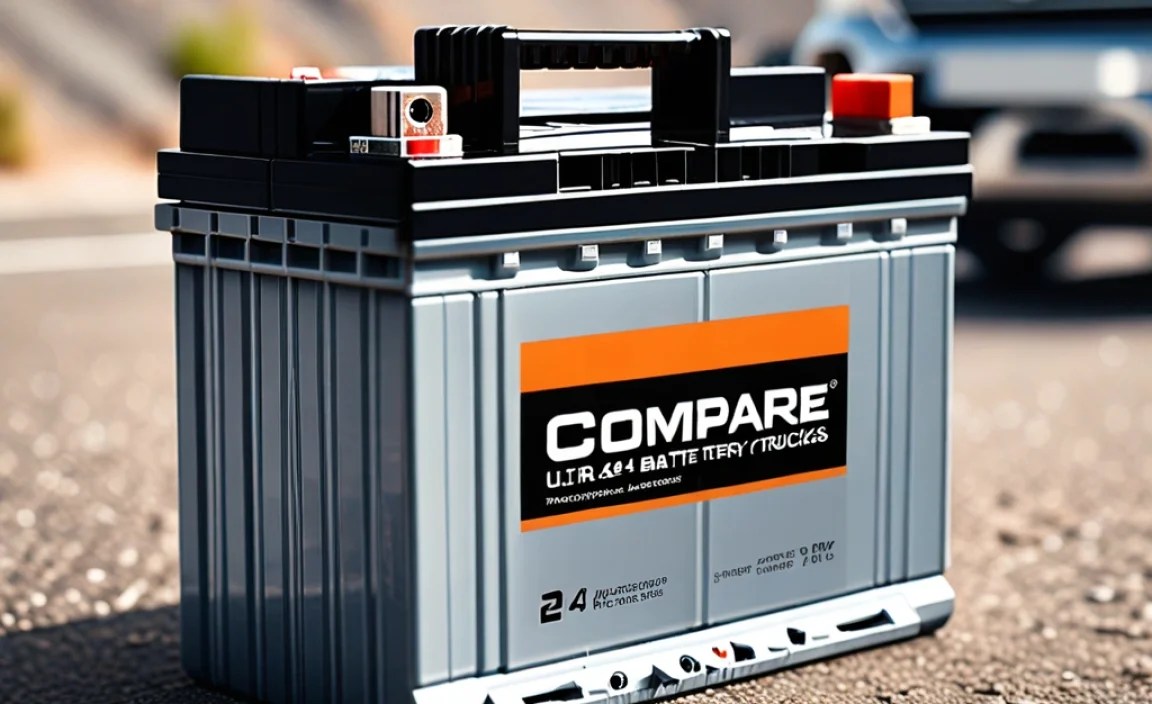
To effectively compare your options for “24V car battery for trucks near me,” it’s helpful to have a system. Let’s look at how to put the knowledge into practice.
Step 1: Know Your Truck’s Exact Requirements
Before you even start looking, consult your truck’s owner’s manual. This is your bible for battery specs. Look for:
- Required Battery Voltage: This should be 24V, but confirmation is key.
- Recommended Group Size: This dictates physical dimensions.
- Minimum CCA: Crucial for starting performance.
- Recommended RC: Important for auxiliary power and longevity.
- Terminal Type: Top post, side post, etc.
If you don’t have the manual, you can often find this information online by searching your truck’s year, make, and model, or by asking at a reputable auto parts store.
Step 2: Identify Available Battery Types
As we discussed, you’ll typically find conventional flooded batteries and AGM batteries. For heavy-duty trucks, AGM batteries offer significant advantages in durability and performance, especially if you use your truck for demanding tasks. While they cost more upfront, their longer lifespan and resilience can make them more economical over time. Consider your budget and your truck’s typical usage. For example, if your truck often idles for long periods or runs power-hungry equipment, an AGM is often the better choice.
Step 3: Compare CCA and RC Ratings
Once you’ve identified compatible batteries, compare their CCA and RC ratings. Always aim to exceed the minimum CCA your truck requires. If two batteries meet your minimum needs, compare their RC ratings. A higher RC means more reserve power, which is generally better. Don’t be swayed by excessively high numbers if they come with a much higher price tag than necessary.
Step 4: Evaluate Warranty and Brand Reputation
A good warranty can save you a lot of hassle and money down the line. Look for batteries with at least a 1-year free replacement warranty, and preferably longer. Brands like Duralast, Optima, Odyssey, and Interstate are well-regarded in the truck battery market, but many other manufacturers offer reliable products. Read online reviews and ask for recommendations from mechanics or other truck owners in your area.
Step 5: Consider Price and Installation
Price is always a factor. Compare the total cost, remembering that you’ll likely need two batteries to form your 24V system. Factor in the warranty and the expected lifespan to determine the true value. Some stores offer free installation, which can be a significant benefit, especially if you’re not comfortable doing it yourself. If you are planning a DIY installation, ensure you have the necessary tools and safety equipment.
A Table for Comparing Truck Battery Specifications
To help you visualize your options, here’s a sample comparison table you can use when looking at batteries. You’ll want to fill this out with the actual specs of the batteries you find near you.
| Feature | Battery Option A (e.g., Brand X Heavy Duty) | Battery Option B (e.g., Brand Y AGM) | Battery Option C (e.g., Brand Z Premium) |
|---|---|---|---|
| Price (per battery) | $180 | $250 | $210 |
| Type | Flooded Lead-Acid | AGM | Flooded Lead-Acid |
| CCA Rating | 1000 CCA | 1150 CCA | 950 CCA |
| RC Rating | 180 mins | 200 mins | 170 mins |
| Warranty (Free Replacement) | 1 Year | 3 Years | 1 Year + 2 Years Pro-rated |
| Dimensions (L x W x H) | 12.8″ x 7.1″ x 9.1″ | 13″ x 6.8″ x 9.4″ | 12.9″ x 7.2″ x 9. |