A reliable battery pack for outdoor adventures keeps your devices charged and connected. These portable power solutions are essential for keeping phones, cameras, and lights running when you’re off the grid. Investing in the right one ensures you stay powered up, safe, and entertained on any trip.
Battery Pack for Outdoor: Essential Power for Your Adventures
Ever been on a camping trip, a long hike, or even just a day at the beach, only to have your phone die right when you need it most? It’s frustrating, isn’t it? That moment of being disconnected can ruin a great experience. Luckily, a good battery pack for outdoor use is your secret weapon against dead devices. It’s like having a mini power station in your pocket, ready to breathe life back into your gadgets. You don’t need to be a tech whiz to understand how they work or how to pick the right one. We’ll break it all down, step-by-step, so you can enjoy your outdoor fun without worrying about running out of juice.
Why You Need a Battery Pack for Outdoor Adventures

Outdoors, you’re often far from wall outlets. Whether you’re navigating with your phone’s GPS, capturing stunning photos, keeping kids entertained with a tablet, or just need your phone for safety calls, consistent power is key. A battery pack acts as a lifeline when electricity is scarce. It’s not just about convenience; it’s about preparedness.
Think about it:
- Safety: Your phone is your emergency contact. A dead battery can be dangerous.
- Navigation: GPS apps drain batteries quickly. Stay on track with reliable power.
- Memories: Don’t miss that perfect sunset shot because your camera battery died.
- Connectivity: Stay in touch with friends and family, or share your amazing experiences online.
- Entertainment: Keep devices powered for music, podcasts, or games during downtime.
Understanding Battery Pack Basics
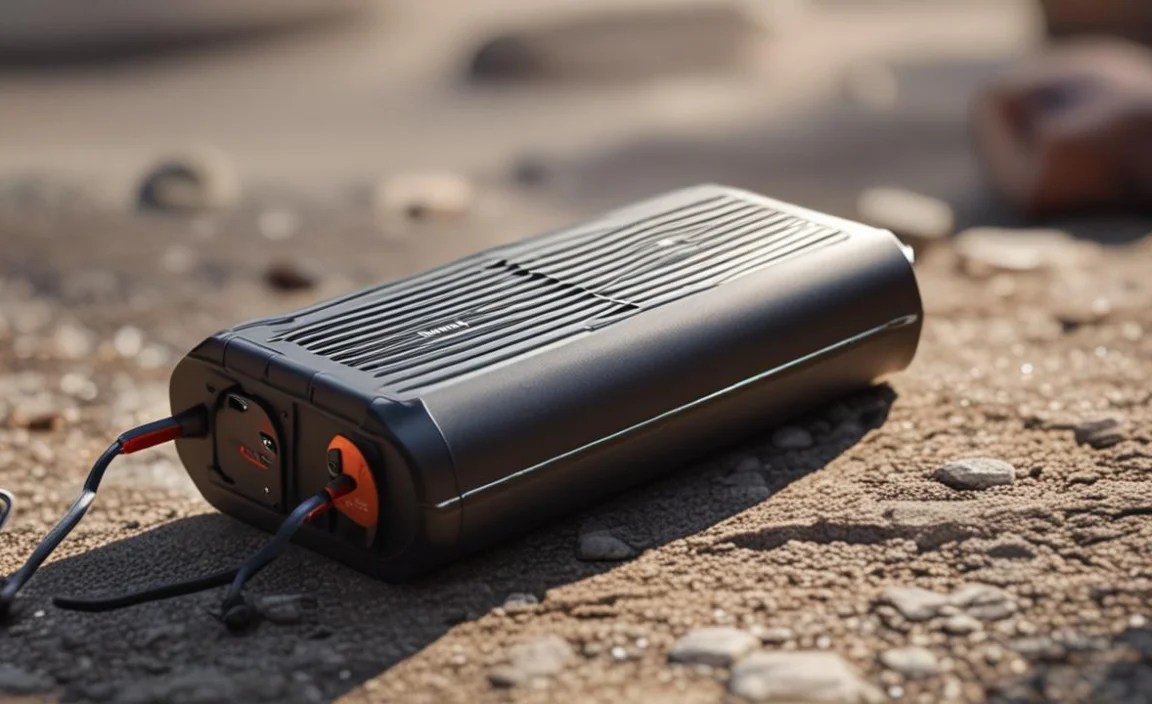
Before we dive into choosing the best battery pack, let’s quickly understand what makes them tick. At its core, a battery pack is a portable unit containing rechargeable batteries. It stores energy and can transfer it to other devices via USB ports.
Key Terms You’ll Hear
- mAh (milliampere-hour): This is the unit of battery capacity. A higher mAh means the battery pack can hold more charge and power your devices for longer.
- Ports: These are the connections where you plug in your devices to charge them (usually USB-A or USB-C).
- Rechargeable: All modern battery packs use rechargeable batteries, meaning you can plug the pack itself into a wall outlet or other power source to replenish its energy.
- Input/Output: The input port is where you charge the battery pack. The output ports are where you charge your devices.
Choosing the Right Battery Pack for Your Needs

Not all battery packs are created equal. What works for a quick day trip might not be enough for a week-long camping expedition. Let’s look at what factors matter.
Capacity (mAh): How Much Power Do You Need?
This is arguably the most important factor. Your needs determine the capacity you should look for. Here’s a general guide:
- 10,000 mAh: Good for 2-3 full phone charges. Ideal for day trips and weekend getaways.
- 20,000 mAh: Can charge a smartphone 4-6 times or a tablet 1-2 times. Great for longer trips or powering multiple devices.
- 30,000+ mAh: For extended adventures, powering laptops, or keeping several gadgets running for days.
Pro Tip: Always consider the battery capacity of the devices you plan to charge. A typical smartphone battery is around 3,000-5,000 mAh. A 10,000 mAh pack will likely give you about two full charges, not three, because some energy is lost in the charging process.
Ports and Charging Speed
Look at the types and number of ports. Most modern battery packs have USB-A ports for older devices and USB-C ports, which are faster and can often charge larger devices like tablets and even some laptops.
Charging Speed:
- Standard USB: Offers slower charging, often around 5W or 10W.
- Quick Charge (QC): Technologies like Qualcomm Quick Charge can significantly speed up charging for compatible devices.
- USB Power Delivery (USB PD): This is a newer, faster standard that uses USB-C ports. It can deliver much higher wattage (e.g., 18W, 30W, 60W, or even 100W+) to charge devices, including laptops, much faster.
For outdoor use, fast charging is a big plus, especially if you only have short windows to recharge your devices (like during a car ride or a brief stop). Check if your phone or devices support fast charging technologies before relying on them.
Durability and Ruggedness
If you’re heading into rough terrain, your battery pack needs to be tough. Look for:
- Water Resistance: Essential for camping, hiking, or any activity where your pack might get wet. Look for IP ratings (e.g., IPX4 for splash resistance, IPX7 for submersion).
- Dustproof: Important for dusty environments.
- Shockproof: Should withstand drops and bumps. Many rugged packs have rubberized casings.
Extra Features to Consider
Some battery packs come with handy additions:
- Built-in LED Flashlight: Incredibly useful for finding your way in the dark around the campsite.
- Solar Panel: Some packs have small solar panels to trickle-charge the battery. While these are rarely sufficient to fully recharge a large pack, they can help maintain a charge in emergency situations or for very low-power devices. For serious solar charging, you’d typically need a separate, larger solar panel. You can learn more about solar power for camping on resources like the U.S. Department of Energy’s site.
- Multiple Outputs: Allows you to charge several devices at once.
- Pass-Through Charging: Lets you charge the battery pack and a connected device simultaneously.
Top Battery Pack Types for Outdoor Use

Here’s a quick look at common types and what they’re best for:
Standard Portable Chargers
These are the most common type. They come in various capacities and are great for general use. They are lightweight and compact, perfect for carrying in a backpack or day bag.
Rugged Outdoor Power Banks
Built for adventure, these are designed to withstand drops, water, and dust. They often have larger capacities and built-in flashlights. A good example of a rugged charging product can be found by looking at established outdoor gear brands.
Solar Power Banks
These have a solar panel on the casing. They are a good eco-friendly option, but their charging speed from solar alone is very slow. They are best used as a backup to keep a standard charge going.
High-Capacity Power Stations
These are much larger and heavier but offer significantly more power, often with AC outlets for larger appliances and multiple USB ports. They are more suited for car camping or base camps rather than ultralight backpacking, but they offer incredible versatility. When considering larger power solutions, it’s useful to understand the fundamentals of battery types, such as those discussed by organizations like NIST (National Institute of Standards and Technology).
How to Use Your Battery Pack Safely and Effectively

Using your battery pack is simple, but following a few best practices ensures its longevity and your safety.
Charging Your Battery Pack
- Find a power source: Use a wall adapter, a car charger, or a computer’s USB port.
- Connect the cable: Use the cable that came with your battery pack to connect it to the power source.
- Monitor charging: Most packs have indicator lights that show the charging progress.
- Unplug when full: Once fully charged, disconnect it to prevent overcharging, although most modern packs have protection against this.
Charging Your Devices
- Turn on the battery pack: Most have a power button.
- Connect your device: Use the appropriate USB cable to connect your phone, tablet, or other gadget to one of the battery pack’s output ports.
- Start charging: Your device should begin charging automatically.
- Disconnect when done: Unplug your device and the battery pack when charging is complete.
Important Safety Tips
- Avoid extreme temperatures: Don’t leave your battery pack in a hot car or freezing conditions. This can damage the battery cells and reduce its lifespan.
- Keep it dry: Unless it’s specifically waterproof, protect it from rain and submersion.
- Use quality cables: Cheap cables can charge slowly or even damage your devices or the battery pack.
- Don’t disassemble: Never try to open up your battery pack. It contains lithium-ion batteries, which can be dangerous if handled improperly.
- Check for damage: If your battery pack looks swollen, leaks, or gets excessively hot during charging or use, stop using it immediately and dispose of it properly.
Comparing Popular Battery Pack Features
To help you decide, here’s a comparison of features you might find across different battery packs. This isn’t an exhaustive list of models, but rather a guide to common specifications.
| Feature | Basic Models (10,000 mAh) | Mid-Range Models (20,000 mAh) | Rugged/High-Capacity Models (30,000+ mAh) |
|---|---|---|---|
| Capacity (Approximate Phone Charges) | 2-3 | 4-6 | 7+ |
| Typical Ports | 1-2 USB-A, maybe 1 USB-C | 2-3 USB-A, 1-2 USB-C (often with PD) | 2-4 USB-A, 2-3 USB-C (high wattage PD), sometimes AC outlet |
| Weight | Light (around 200-300g) | Medium (around 400-600g) | Heavy (600g+) |
| Durability Features | Usually standard | May offer some water/dust resistance | Often waterproof, dustproof, shockproof |
| Extra Features | Basic LED indicator | Flashlight, pass-through charging | Built-in flashlight, solar panel (often slow), AC outlets |
| Best For | Day trips, commuting, emergency phone top-ups | Weekend camping, travel, powering multiple devices | Extended off-grid trips, powering small appliances, base camps |
Maintaining Your Battery Pack for Longevity
A little care goes a long way in making your battery pack last through many adventures.
Regular Charging
Don’t let your battery pack sit completely discharged for extended periods. Try to keep its charge level between 20% and 80% for optimal battery health. Recharge it after each significant use and before storing it long-term.
Storage Conditions
Store your battery pack in a cool, dry place, away from direct sunlight and extreme temperatures. If storing for several months, charge it to about 50% first.
Software Updates (for Smart Packs)
Some advanced battery packs can be updated via software to improve performance or fix bugs. Check the manufacturer’s website occasionally.
Battery Pack vs. Other Power Solutions
When you’re outdoors, what are your options for staying powered? Let’s compare battery packs to a few other common solutions.
Car Battery
Your car battery is designed to start your engine. While it has a lot of power, it’s not meant for sustained device charging. Running devices directly from your car battery (without the engine running) can drain it, potentially leaving you stranded. If you need to charge while driving, using your car’s accessory port (cigarette lighter adapter) is the safest way. For information on car battery maintenance, resources like NHTSA (National Highway Traffic Safety Administration) often have helpful safety guides.
Phone Battery
Your phone battery is what you’re trying to charge! It’s small and only holds enough power for its intended use with the phone itself.
Power Bank (Battery Pack)
This is the hero of our story! It’s portable, versatile, and designed specifically to charge other devices. It acts as an external power source, giving your phone and other gadgets a new lease on life when you’re away from a wall outlet.
Charger (Wall Adapter / Car Charger)
A charger (like a wall adapter or car charger) is what you use to replenish the battery pack’s energy. It converts AC power from the wall or DC power from your car into USB power. You can’t use a charger to power your phone directly from the wall if you’re in the middle of a hike; you need the stored energy from a battery pack.
DIY Battery Pack Maintenance (What NOT to Do)
As Roy Walker, my advice is always to stick to what’s designed and safe. Tampering with battery packs is dangerous.
Never attempt to:
- Replace individual battery cells inside a sealed battery pack.
- Repair a damaged battery pack yourself.
- Expose the battery pack to water if it’s not rated for it.
- Try to fast-charge it with an incompatible charger.
Modern battery packs are complex and contain safety circuits. Physical damage or improper handling can lead to overheating, fire, or explosion. If your battery pack is damaged, it’s best to recycle it responsibly and purchase a new one.
When to Consider a Car Battery for Backup
While a car battery isn’t portable, it’s a significant power reserve. If you’re car camping and need to power larger items for short periods, or if you’re facing an extended power outage at home and have vehicle-to-load (V2L) capabilities or a suitable inverter, your car battery can be a last resort. However, always be mindful of its primary function: starting your car. Draining it too much can leave you stranded. Check your car’s manual for any limitations or recommendations regarding accessory power usage.
Frequently Asked Questions (FAQs)
Q1: How many times will a battery pack charge my phone?
A: It depends on the battery pack’s capacity (mAh) and your phone’s battery capacity. A 10,000 mAh pack typically provides 2-3 full charges for a standard smartphone (3,000-5,000 mAh). Remember that some energy is lost during the charging conversion.
Q2: Can I use any USB cable to charge my devices with a battery pack?
A: While most standard USB cables will work, using a quality cable designed for your device can ensure faster charging speeds and prevent damage. For fast charging, ensure the cable supports the required wattage.
Q3: Are solar power banks good for long trips?
A: Solar power banks are best for topping up charge in bright sunlight or for powering very low-drain devices. They are generally too slow to fully recharge a large battery pack on their own, especially in less-than-ideal weather. They are a good supplementary option, not a primary charging solution for extended trips.
Q4: Is it safe to use my phone while it’s charging from a battery pack?
A: Yes, in most cases, it’s perfectly safe. Some phones might heat up slightly more than usual, but this is generally normal. Avoid heavy gaming or intensive tasks that generate a lot of heat while charging to prevent overheating.
Q5: How do I know when to replace my battery pack?
A: If your battery pack no longer holds a charge for a significant period, takes an unusually long time to charge, or gets