For winter, a 24V car battery isn’t standard for most cars. Typically, cars use 12V batteries. If you have a specific heavy-duty vehicle or specialty equipment needing a 24V system, ensure it’s compatible. Always check your vehicle’s manual before comparing or replacing any battery, especially for winter readiness.
Driving in winter can be tough on your car, and the battery is one of the first things to feel the cold. When the temperature drops, your battery’s power can decrease, making it harder to start your engine. This is especially true if your battery is getting old or hasn’t been maintained. Many drivers wonder if a 24V car battery is what they need for winter. Let’s clear things up.
Most everyday cars and light trucks run on a 12-volt electrical system, meaning they use a 12V battery. You won’t typically find a standard “24V car battery” for a regular passenger vehicle. However, some specialized vehicles, like certain commercial trucks, heavy machinery, or RVs, might use a 24V system. If your vehicle manufacturer specifies a 24V battery, it’s crucial to get the right one to ensure it starts reliably, especially when it’s freezing outside.
This guide will help you understand what battery voltage your vehicle needs, what to look for when comparing batteries for winter, and how to find the best options. We’ll make sure you’re equipped to keep your vehicle powered up, no matter how cold it gets.
Understanding Car Battery Voltage: 12V vs. 24V

It’s important to start with the basics. Car batteries provide the electrical power to start your engine and run all the electronics when the engine isn’t running. The voltage of a battery tells us how much electrical “push” it has.
What is Battery Voltage?
Think of voltage like water pressure in a pipe. Higher voltage means more electrical “push.” Most modern cars, SUVs, and light trucks use a 12-volt (12V) battery. This is the standard because it’s sufficient for starting these vehicles and powering their systems.
When Are 24V Systems Used?
A 24V system is less common for personal vehicles. You’re more likely to find them in:
- Heavy-duty trucks and buses
- Military vehicles
- Some larger construction or agricultural equipment
- Certain recreational vehicles (RVs) or boats
These larger vehicles often need more power to crank their bigger engines, or they have more complex electrical systems that benefit from a higher voltage. Sometimes, a 24V system is achieved by using two 12V batteries wired together in series. This is usually done at the factory and is part of the vehicle’s original design.
Why Your Vehicle’s Voltage Matters
Using the wrong voltage battery can be dangerous and damaging. A 12V car won’t work with a 24V battery, and vice versa. The car’s electrical components are designed for a specific voltage. Putting the wrong one in can:
- Damage the electronics
- Prevent the engine from starting
- Cause electrical shorts or fires
Therefore, the first and most critical step is to know what your vehicle requires. Always consult your car’s owner’s manual or look at the existing battery if you’re unsure about the correct voltage.
Your Vehicle’s Needs: 12V or 24V?

Before you even start looking at “compare 24V car battery for winter,” you need to confirm your vehicle’s baseline requirement. This isn’t a decision you can guess; it’s dictated by your car’s engineering.
How to Find Your Vehicle’s Battery Voltage
Here are the easiest ways to check:
- Owner’s Manual: This is your car’s bible. It will clearly state the recommended battery type, including voltage.
- The Old Battery: Look at the label on your current battery. It will almost always say “12V” or “24V.”
- Under the Hood: Sometimes, there’s a sticker under the hood or on the battery tray indicating the voltage.
- Online Vehicle Specification Guides: Reputable auto parts stores or car manufacturer websites have databases where you can enter your car’s make, model, and year to find its specifications.
For 99% of passenger cars and light trucks, you’ll be looking for a 12V battery. If your vehicle is something more specialized, like a large diesel truck, then a 24V system might be correct.
What If You’re Considering a 24V Upgrade?
If you have a 12V vehicle and are wondering about a 24V battery for better winter performance, stop. This is not how car electrical systems work. You cannot simply swap a 12V battery for a 24V battery and expect it to work. Your car’s alternator, starter, and all its computers are designed for 12V. An upgrade to a 24V system would require a complete overhaul of your vehicle’s electrical architecture, which is a complex and expensive job not suitable for a simple battery swap.
Winter Battery Performance: What Matters Most

Winter is the ultimate test for a car battery. Cold temperatures sap its power, and the demands on the battery increase. When we talk about preparing a battery for winter, we’re usually talking about getting the most out of a standard 12V battery (or a 24V if that’s what your vehicle requires).
Cold Cranking Amps (CCA): The Winter Warrior
This is the most important rating for winter battery performance. CCA measures how much power a battery can deliver for 30 seconds at 0°F (-18°C) without dropping below 7.2 volts. The higher the CCA rating, the better your battery will be at starting your engine in the cold.
- Why it’s crucial for winter: Cold oil is thicker, making your engine harder to turn over. A battery with high CCA can overcome this resistance.
- What to look for: Check your owner’s manual for the recommended CCA. For winter, it’s often a good idea to match or slightly exceed this rating if possible, especially if you live in a very cold climate.
Reserve Capacity (RC)
This rating tells you how long a fully charged battery can deliver 25 amps at 80°F (27°C) before its voltage drops below 10.5 volts. While less critical than CCA for starting in the cold, a higher Reserve Capacity means your battery can power essential accessories for a longer time if your alternator fails or if you’re stuck with your engine off.
Temperature Effects on Batteries
Understanding how extreme temperatures affect batteries is key:
A battery’s ability to deliver power decreases as it gets colder. At freezing temperatures, a battery might only have about 50-60% of its rated power. At Arctic temperatures, this can drop even lower!
Conversely, heat is also a battery killer, but it’s a slow killer. Heat can degrade the internal components over time. While we’re focusing on winter, remember that a battery that’s survived many hot summers might be weakened and less capable of handling winter’s demands.
Battery Age and Condition
Batteries have a lifespan, typically 3-5 years. An older battery is less likely to perform well in extreme conditions. If your battery is nearing the end of its life, winter is the most likely time for it to fail. It’s often wise to test your battery at the start of the cold season and consider replacement if it’s old or showing signs of weakness.
Comparing Batteries: Key Specs for Winter
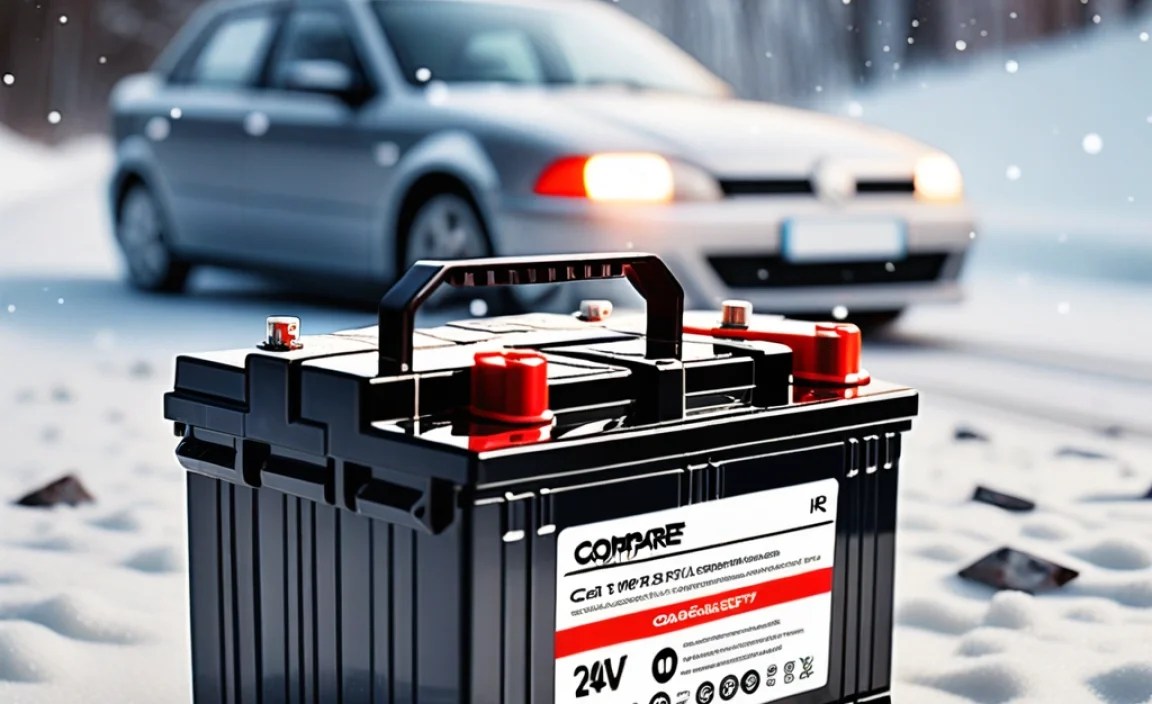
When you’re ready to compare batteries, whether it’s for a 12V or a specific 24V system, focus on these critical factors, especially for reliable winter performance.
| Specification | What it Means | Importance for Winter | Where to Find It |
|---|---|---|---|
| Voltage (V) | The electrical “push” of the battery (e.g., 12V, 24V). | Essential: Must match your vehicle’s system exactly. | Battery label, owner’s manual. |
| Cold Cranking Amps (CCA) | Power output at 0°F (-18°C). | Crucial: Higher CCA equals better starting in cold. | Battery label or specifications sheet. |
| Reserve Capacity (RC) | Time battery can power accessories if alternator fails. | Important: For accessory power when engine is off. | Battery label or specifications sheet. |
| Group Size | Standardized physical dimensions and terminal placement for fitment. | Essential: Battery must fit correctly in the tray. | Owner’s manual, auto parts store databases. |
| Warranty | Length of manufacturer guarantee against defects. | Good to have: Peace of mind, especially before winter. | Product packaging, retailer information. |
Choosing the Right Voltage and Group Size
This is non-negotiable. The voltage must be correct for your vehicle. The battery must also physically fit in your vehicle’s battery tray and have the terminals in the right position to connect the cables. This is determined by the “Group Size.”
- Consult your manual: It will specify the required group size (e.g., Group 24F, Group 35).
- Use online tools: Auto parts websites have “fitment guides” where you enter your vehicle details.
Never try to force a battery that doesn’t fit, and always ensure the positive and negative terminals align with your car’s cables.
High CCA for Cold Climates
If you live where winter means snow and ice, prioritize CCA. Even if your car’s manual states a minimum CCA, choosing a battery with a higher rating can provide an extra margin of safety. This is especially true if you frequently make short trips, as a shorter trip may not fully recharge the battery.
Brand Reputation and Warranty
While CCA and voltage are primary, consider the brand. Reputable brands often invest more in quality control and use better materials, leading to a more reliable battery. A longer warranty can also be a good indicator of a manufacturer’s confidence in their product. Look for warranties of 3 years or more, especially for premium batteries.
Where to Find and Compare Batteries

You have several options when it comes to finding and purchasing a car battery. Knowing your options helps you compare effectively and find what you need, especially if you’re searching for “compare 24v car battery for winter near me” (remembering that for most, this will still mean a 12V battery).
Local Auto Parts Stores
These are usually the go-to places. Stores like AutoZone, O’Reilly Auto Parts, Advance Auto Parts, and local independent shops carry a wide range of batteries. The staff can often help you identify the correct battery for your vehicle.
- Pros: Easy to find, knowledgeable staff, often offer installation services, immediate availability.
- Cons: Prices can sometimes be higher than online retailers.
Online Retailers
Websites like Amazon, Walmart, and specialized battery retailers offer vast selections. You can often find competitive pricing and read customer reviews, which can be helpful for comparing performance.
- Pros: Wide selection, competitive pricing, convenience of home delivery.
- Cons: You need to install it yourself (or find a shop that will), longer wait for delivery, harder to physically inspect.
Car Dealerships
Dealerships offer batteries specifically designed for your car’s make and model. They are guaranteed to fit and meet manufacturer specifications.
- Pros: Perfect fit, OEM quality, often come with a good warranty.
- Cons: Usually the most expensive option.
Battery Specialty Shops
These stores focus solely on batteries for all types of vehicles and equipment. They might have a wider selection of high-performance or specialized batteries.
- Pros: Deep expertise, specialized products.
- Cons: May be fewer locations, potentially higher prices for standard batteries.
The Process of Buying a New Battery
Once you know what you need, the buying process is straightforward. If you’re searching for “compare 24v car battery for winter,” and your vehicle does require a 24V system, the comparison remains the same: voltage, CCA, RC, group size, and warranty. If you have a standard car, you’ll be looking for a 12V battery with the highest safe CCA you can find within your budget and required group size.
Step-by-Step Buying Guide
- Confirm Your Needs: Double-check your owner’s manual for the correct voltage, group size, and minimum CCA.
- Determine Your Budget: Batteries range from under $100 to over $250, depending on type, brand, and warranty.
- Shop Around: Compare prices and specifications at a few different retailers (online and local). Look for sales, especially before winter.
- Check “Built Date”: Batteries degrade over time, even on the shelf. Look for a sticker on the battery indicating its manufacturing date (month/year). Aim for a battery no older than 6 months.
- Consider Free Installation: Many auto parts stores offer free battery installation if you bring your old battery in.
- Old Battery Disposal: Most retailers will take your old battery for recycling, a service that’s often included with purchase. This is important as batteries contain harmful lead and acid.
Replacing Your Car Battery: A Practical Guide
If you’re comfortable, replacing a car battery is a manageable DIY task. It’s essential to do it safely. You’ll need to know how to disconnect and reconnect!
Safety First! Essential Precautions
Car batteries store a lot of energy and contain corrosive acid. Always follow these safety rules:
- Wear Safety Glasses: Protect your eyes from any potential sparks or battery acid.
- Wear Gloves: Protect your skin from acid and dirt.
- Work in a Well-Ventilated Area: Batteries can release flammable hydrogen gas.
- No Smoking or Open Flames: Seriously, fire hazard!
- Remove Metal Jewelry: Rings, watches, and necklaces can cause a short circuit if they touch battery terminals and metal parts of the car.
- Keep Tools Away from Terminals: Use insulated tools or be very careful not to let a wrench touch both terminals at once or a terminal and the car’s metal body.
Tools You’ll Need
Most battery replacements require basic tools:
- Wrench Set or Socket Set: Commonly a 10mm or 13mm wrench is needed for the terminal clamps and hold-down bracket.
- Battery Terminal Cleaner/Wire Brush: To clean corrosion from terminals and cables.
- Anti-Corrosion Spray or Grease: To protect new terminals (optional but recommended).
- New Battery: Obviously!
For more information on car maintenance, resources like Popular Mechanics’ How-To Section offer excellent, detailed guides on various automotive tasks.
Step-by-Step Replacement Process
- Locate the Battery: It’s usually under the hood, but in some cars, it might be in the trunk or under a seat.
- Identify Terminals: The positive (+) terminal is usually larger and marked in red. The negative (-) terminal is marked with black.
- Disconnect the Negative Terminal FIRST: Use your wrench to loosen the nut on the negative terminal clamp. Remove the clamp from the battery post. Tuck the cable aside so it can’t accidentally touch the battery post.
- Disconnect the Positive Terminal SECOND: Now, loosen the nut on the positive terminal clamp and remove the clamp.
- Remove the Hold-Down Bracket: There’s usually a bracket securing the battery to the tray. Remove the bolts or nuts holding this bracket.
- Lift Out the Old Battery: Batteries are heavy! Lift it straight up and out of the tray